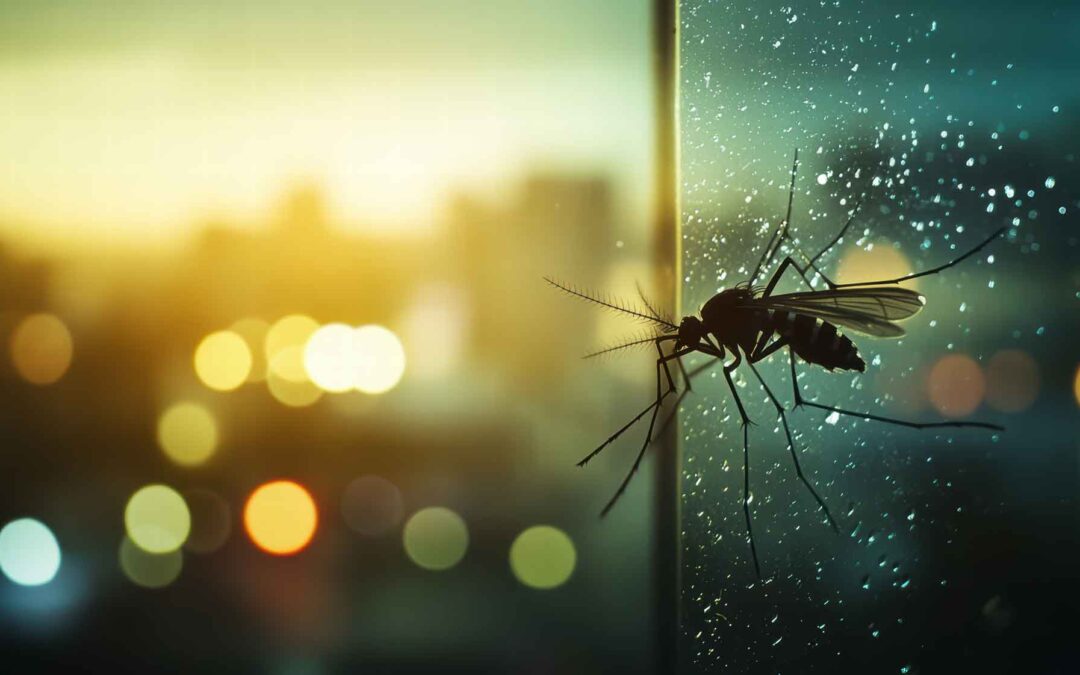
Recently (September 2026), the detection of a breeding population of Aedes aegypti (the yellow fever mosquito) in east London is more alarming as a warning of future ecological change driven by rising temperatures than as a health crisis. Despite this species being capable of transmitting dengue, yellow fever, chikungunya and Zika viruses, amongst others, the current level of public health risk appears to be very low according to the UK Health Security Agency (UKHSA), with no reported human infections associated with this finding or evidence of spread into nearby public areas.
This is an example of how warming conditions, international travel and trade, and adapting vector species are making tropical disease risks increasingly relevant in temperate Europe. Together with the locally acquired West Nile virus infections and associated fatalities reported in the Netherlands during 2026, it highlights the need for continued vigilance and preparedness against these developing challenges. Without appropriate surveillance and control measures, these changing conditions could contribute to an expansion of disease risks in northern Europe.
During the first week of September 2026, the UKHSA identified both adult and larval stages of Aedes aegypti at residential properties in east London. This is the first reported case of this species breeding in the United Kingdom, although the mosquito has been detected on three previous occasions in the country in recent years, most likely due to accidental introductions through shipping, transport or tourism. The initial identification was reported through the Mosquito Watch scheme, and control measures were implemented immediately to destroy the larvae and prevent further breeding.
Aedes aegypti is an extremely competent vector of dengue, chikungunya, Zika and yellow fever viruses in areas where these pathogens are present. These mosquitoes are anthropophilic, meaning they preferentially feed on humans, and usually breed in small containers of water (such as garden containers, tyres and water butts). They typically bite during the daytime and are frequently found inside or around human dwellings.
The UKHSA and independent experts are also pointing out that the risk is very small at the moment, since the mosquitoes are thought to have been accidentally introduced into the UK through various means, such as vehicles, luggage and imported vegetation. There is no evidence that they were carrying human pathogens, and the UK climate is still generally too cold for the species to survive and establish itself permanently. The recent heatwaves allowed breeding to take place, but typically, British winters would prevent the population from surviving long-term.
Martin Hibberd, Professor of Emerging Infectious Disease at the London School of Hygiene & Tropical Medicine, described finding Aedes aegypti breeding in London as “a milestone event”. Longer periods of warmer temperatures facilitate mosquito development, extend their activity periods and can enhance replication of these viruses within competent vectors, including A. aegypti. Given that London has a high population density and considerable internal movement, as well as close connections to areas with endemic transmission, there is also a theoretical possibility of virus introduction if the mosquitoes do become established. The Asian tiger mosquito (Aedes albopictus), which is more cold-resistant and has become established in continental Europe (causing dengue and chikungunya outbreaks in Italy, France and elsewhere), is still, however, regarded as a more immediate threat.
So why is the identification of breeding troubling despite the agreed low current risk? It suggests that environmental conditions that can temporarily support mosquito reproduction have been reached in London, one of the largest cities in northern Europe. Each successful breeding incident highlights the possibility of further introductions, the survival of previously undetected populations, and the potential for repeated breeding if favourable conditions persist. Over time, repeated introductions and successful establishment could increase the likelihood of these competent vectors becoming a more permanent feature of the European mosquito population. This also creates the possibility that an infected traveller could introduce a virus into a local mosquito population, potentially triggering limited local transmission during a warm period.
While the emergence of Aedes aegypti in the UK should be considered an early warning rather than an immediate public health emergency, these findings, alongside the chikungunya outbreaks in France and Italy in 2025 and significant West Nile virus outbreaks across southern Europe, demonstrate that local transmission is no longer a theoretical possibility.
Surveillance and mosquito control alone are unlikely to provide a complete response to the growing threat. Europe and the UK must also invest more seriously in pharmacological interventions against mosquito-borne viruses. Although vaccines have an important role, widespread deployment may be challenging when outbreaks are sporadic and geographically unpredictable. Chikungunya illustrates this well: two vaccines have reached the market, but the live-attenuated IXCHIQ had its UK marketing authorisation withdrawn in October 2026 following reports of serious adverse reactions, leaving a single licensed option for UK travellers.
Antiviral drugs and antibody-based therapies should therefore become a greater priority, particularly for severe disease. The gap is stark: for West Nile virus, there are still no approved or recommended therapies and clinical management remains supportive. For those of us working in antiviral research and development, the challenge is to translate awareness into practical therapeutic solutions. At VRS we work with several of these viruses and have supported antiviral drug discovery and antibody development across a wide range of viral diseases. Strengthening the capacity to evaluate and develop these approaches is essential to ensuring effective treatments are available when needed.
As we adapt to global warming across many areas of society, from drought-resistant planting to flood defences and heat-resilient buildings, we should also invest in treatments for the diseases that may increasingly accompany these changes.
Blog by Paul Griffin